
TRANSFORM YOUR HEALTH WITH THE EXPERTISE AND EXPERIENCE OF A DOUBLE BOARD-CERTIFIED PHYSICIAN
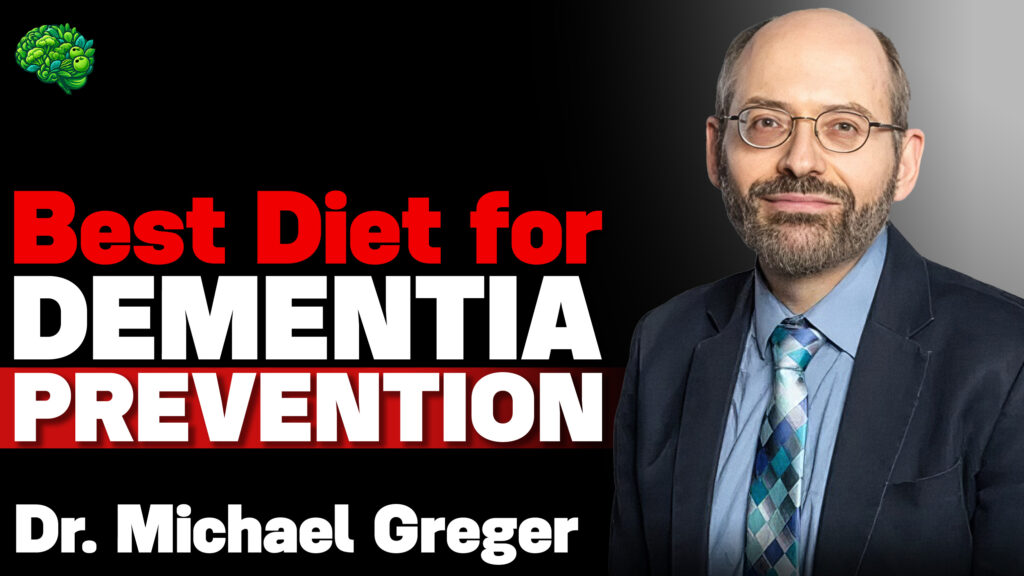
Did you know that populations that primarily eat plant-based diets have dramatically lower rates of dementia? In this episode, Dr. Michael Greger, a renowned physician and author, shares groundbreaking research on how nutrition, particularly plant-based diets, affects Alzheimer’s prevention.
We examine the science behind heart-healthy, brain-boosting foods, emphasizing the importance of a whole-food, plant-based diet for overall well-being. You’ll learn how simple dietary changes can alter the course of cognitive health and how the latest studies are reshaping our understanding of brain aging.
Whether you’re looking to prevent Alzheimer’s or simply optimize your brain health, Dr. Greger offers actionable advice supported by decades of research. Tune in to discover how small changes in your diet can have a profound impact on your cognitive function and longevity.
“Alzheimer's is related to the atherosclerotic buildup of plaque inside the intracranial arteries in the brain. So the same dietary changes that can help with cardiovascular health can also help with cognitive health. In other words, what's good for the heart is good for the head.”
Dr. Michael Greger, M.D. FACLM
In this Episode
00:00 – Introduction to Dr. Michael Greger
02:28 – The importance of lifestyle for brain health
04:50 – How heart-healthy diets support brain health
06:40 – Practical tips for adopting a plant-based diet wherever you are
10:00 – The ketogenic diet debate
14:27 – How pollutants affect brain health
16:46 – The link between diabetes and Alzheimer’s
22:04 – Dr. Greger’s thoughts on lab testing
24:28 – Debunking common myths about plant-based eating
28:07 – How to stick to healthy habits
29:59 – Is fasting good for cognitive health?
Resources:
– Top Supplements for Alzheimer’s Guide
– How Not to Age by Dr. Michael Greger
Connect with Dr. Michael Greger, M.D. FACLM:
– Website
– YouTube
Connect with Dr. Josh Helman, MD:
– TikTok
– YouTube
– Others
Disclaimer: Please remember that this podcast is for informational purposes only and is not intended as medical advice. Always consult your doctor or healthcare professional before making any changes to your treatment plan.
–
READ THE COMPLETE BLOG POST HERE:
Struggling with memory concerns or worried about cognitive decline as you age? You’re not alone. More families are asking whether a Plant-Based Diet can actually protect the brain and lower Alzheimer’s risk. In this episode of Alzheimer’s Breakthrough, Dr. Josh Helman sits down with Dr. Michael Greger to unpack what decades of nutrition and lifestyle research really show. From vascular health to inflammation and insulin resistance, this conversation connects the dots between what’s on your plate today and how your brain functions years from now. The takeaway is surprisingly empowering: daily food choices may matter more than genetics.
Dr. Greger opens with a question that reframes the entire Alzheimer’s discussion: Why do populations eating mostly plants have dramatically lower rates of dementia? The answer isn’t a single nutrient—it’s a pattern.
A Plant-Based Diet naturally reduces inflammation, improves vascular health, and supports metabolic balance. These three factors sit at the core of Alzheimer’s pathology. When blood flow to the brain improves and inflammatory triggers are reduced, neurons are better able to function and repair themselves.
This helps explain why communities with low animal-product intake consistently show lower dementia rates across the globe.
One of the most important insights Dr. Greger shares is that Alzheimer’s isn’t just a neurodegenerative disease—it’s also vascular and metabolic.
The encouraging news? These are modifiable factors. What protects the heart also protects the brain. Lowering blood pressure, improving cholesterol, and enhancing insulin sensitivity all reduce Alzheimer’s risk at the same time.
For years, critics argued there was no direct evidence that lifestyle could alter Alzheimer’s progression. That changed with a recent randomized controlled trial led by Dr. Dean Ornish.
Participants with early-stage Alzheimer’s were split into two groups:
After six months:
This marked one of the first clinical trials to demonstrate measurable cognitive improvement through lifestyle alone.
Dr. Greger is clear and direct on this point: saturated fat is the most pro-inflammatory macronutrient in the human diet.
High saturated fat intake:
Autopsy studies and brain imaging consistently show that clogged arteries feeding memory centers correlate strongly with Alzheimer’s severity. A Plant-Based Diet naturally minimizes saturated fat while maximizing fiber—the most anti-inflammatory dietary component we know of.
If there were a short list of foods most associated with brain protection, Dr. Greger highlights three categories repeatedly:
This combination forms the backbone of dietary patterns used in Alzheimer’s prevention programs worldwide.
Many people are told they need large amounts of fat for brain health. Dr. Greger challenges this idea with a simple distinction: whole-food fats vs. solid fats.
Healthy sources:
Problematic fats:
The issue isn’t fat itself—it’s the form and context. Solid fats raise LDL cholesterol and promote arterial plaque, including in the brain. Whole-food plant fats come packaged with fiber, antioxidants, and anti-inflammatory compounds that offset risk.
One of the most hopeful parts of the discussion centers on genetics. Even individuals carrying high-risk APOE variants can dramatically reduce Alzheimer’s risk through lifestyle.
Dr. Greger points to populations with high genetic risk but low disease incidence. Their secret isn’t different DNA—it’s low cholesterol, high fiber intake, and minimal animal fat consumption.
If you carry genetic risk, nutrition matters more, not less. A Plant-Based Diet becomes a protective strategy, not a limitation.
Rather than debating opinions, Dr. Greger emphasizes evidence. Randomized trials show that modest omega-3 supplementation—especially from algae-based sources—can support cognitive function when dosed appropriately.
The key is context:
Again, the theme is consistency over shortcuts.
The episode also explores how pollutants may contribute to cognitive decline. Many toxins—heavy metals, pesticides, and persistent organic pollutants—bioaccumulate in animal fat.
Eating lower on the food chain reduces exposure. While the exact contribution of toxins versus saturated fat is still debated, Dr. Greger notes there’s little downside to minimizing exposure when possible.
A Plant-Based Diet naturally limits bioaccumulated toxins without requiring extreme detox protocols.
Type 2 diabetes significantly increases dementia risk. High blood sugar damages nerves throughout the body—including the brain.
The good news is that type 2 diabetes is:
By improving insulin sensitivity, plant-based nutrition directly addresses one of the strongest Alzheimer’s risk factors.
Towards the end of the conversation, Dr. Greger shares a practical insight: habits beat willpower.
Rather than vague goals, he recommends “implementation intentions,” such as:
These simple rules turn healthy behavior into automatic behavior—key for long-term brain protection.
The science is becoming harder to ignore. A Plant-Based Diet consistently aligns with lower inflammation, better vascular health, improved insulin sensitivity, and reduced Alzheimer’s risk. Clinical trials now show that lifestyle changes don’t just slow decline—they may stabilize or improve cognition in early stages.
If you found this helpful, listen to the full episode Can a Plant-Based Diet Prevent Alzheimer’s? and explore more evidence-based conversations on brain health and prevention.
What changes have you made—or are considering—to protect your brain long term? Let me know in the comments and keep the conversation going.
DISCLAIMER: This is not intended to be medical advice. Always consult with your physician first.
*The statements (appearing on this website) have not been evaluated by the Food and Drug Administration. These products are not intended to diagnose, treat, cure, or prevent any disease.
Copyright © 2025 · All Rights Reserved · Dr Josh