
TRANSFORM YOUR HEALTH WITH THE EXPERTISE AND EXPERIENCE OF A DOUBLE BOARD-CERTIFIED PHYSICIAN
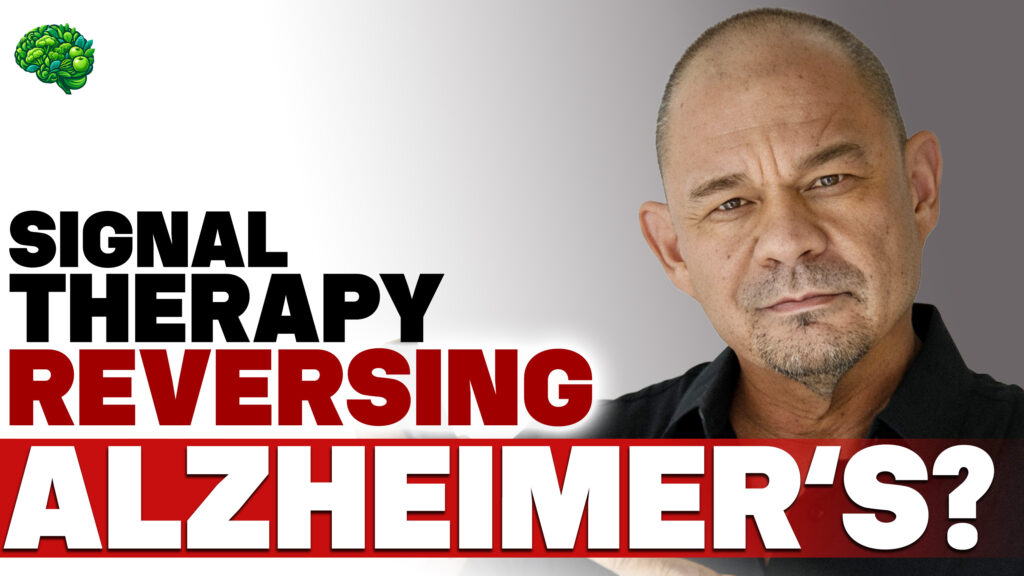
If you’ve ever wondered whether there’s more to brain healing than just stem cells, you’re in for a fascinating conversation. Dr. Greg Carder, a leading expert in regenerative medicine, explains how regenerative signaling factors (RSFs) are proving to be a game-changer in reversing cognitive decline and Alzheimer’s disease. It’s not about adding more cells; it’s about delivering the right signals to the brain in the proper sequence.
We also discuss the role of exosomes, the small particles that carry healing messages to damaged areas of the brain, and how this groundbreaking regenerative approach is providing new hope for those battling Alzheimer’s. Dr. Carder shares case studies demonstrating significant improvement in patients treated with these therapies.
If you’re ready to explore how regenerative signaling is changing the landscape of Alzheimer’s treatment, you’ll want to hear Dr. Carder’s expert advice. Stay tuned to learn how to take proactive steps in brain health!
“If I'm going to live in the world that I live in and I'm going to expose myself to these environmental toxins, then regenerative medicine needs to be a well-rounded and regular component of your hope to at least increase the quality of your life on a day-to-day basis.”
Dr. Greg Carder
In this Episode
00:00 – Introduction to Dr. Greg Carder
03:43 – The importance of RSF for health optimization
07:30 – The role of stem cells in brain regeneration
12:12 – Exosomes and their benefit to our health
20:09 – The placenta as a rich source of MSCs
28:41 – The science behind RSF
32:55 – When not to use regenerative medicine
39:50 – How regenerative therapies can treat Alzheimer’s
43:51 – Case reports of how RSF helped different patients
50:15 – Prerequisites to using RSF on a patient
56:10 – Key takeaway from Dr. Carder
58:55 – Why some doctors are not offering RSF as a healing tool
Resources:
– Top Supplements for Alzheimer’s Guide
Connect with Dr. Greg Carder:
– Website – https://regenmds.com/ and https://www.hydroheal.com/
Connect with Dr. Josh Helman, MD:
– TikTok
– YouTube
– Others
Disclaimer: Please remember that this podcast is for informational purposes only and is not intended as medical advice. Always consult your doctor or healthcare professional before making any changes to your treatment plan.
–
READ THE COMPLETE BLOG POST HERE:
Are you looking for innovative treatments that could help reverse Alzheimer’s and improve brain health? You’re not alone. Regenerative medicine is emerging as a promising approach to tackling cognitive decline, and one exciting development is the use of regenerative signaling factors (RSF). In this episode of Alzheimer’s Breakthrough, Dr. Josh Helman speaks with Dr. Greg Carder about how this next-generation regenerative treatment works. From platelet-rich plasma (PRP) to stem cells and exosomes, RSF represents a leap forward in brain health. Let’s dive into how regenerative signaling factors could offer new hope for those battling Alzheimer’s.
Regenerative signaling factors represent the cutting edge of regenerative medicine. Unlike traditional methods that rely on introducing live cells or genetic material, RSFs focus on delivering the right signals to the body to stimulate self-repair. Dr. Carder explains that these signaling factors don’t introduce new cells or DNA but instead provide the biological instructions that guide the body’s natural healing processes. This unique approach could be the key to reversing cognitive decline, particularly in Alzheimer’s patients.
RSFs are derived from placental tissue, providing a comprehensive array of growth factors and other molecules crucial for regeneration. What makes RSFs stand out from previous methods like PRP and mesenchymal stem cells (MSCs) is their ability to target specific tissues and stimulate repair processes without the risk of immune rejection. This non-invasive method represents a huge leap forward in brain health and regenerative medicine.
Platelet-rich plasma (PRP) and mesenchymal stem cells (MSCs) were the pioneers in the world of regenerative medicine. While these therapies have been effective in treating certain conditions, Dr. Carder discusses how their limitations became apparent, particularly in brain health. One major issue is that these therapies often fail in toxic environments, such as the brain of an Alzheimer’s patient, where toxins and infections compromise healing.
RSF, however, presents a next-generation solution. Dr. Carder emphasizes that RSFs are acellular, meaning they don’t carry any foreign DNA or RNA that could trigger an immune response. This makes them safer and more effective for long-term use in brain health. RSFs also have a longer therapeutic window, with effects lasting up to 21 days or more, unlike exosomes and stem cells, which have a much shorter active lifespan.
Dr. Carder highlights how regenerative signaling factors focus on repair, restore, and remodeling of brain tissue. When administered, RSFs help the body deliver the necessary signals to restore cognitive function. This is especially critical in Alzheimer’s, where disrupted signaling and mitochondrial dysfunction play major roles in disease progression. By reprogramming the brain’s signaling pathways, RSFs help reverse the neurodegenerative process.
Unlike older regenerative treatments, RSFs target specific areas in the brain, promoting tissue repair at a cellular level. For patients suffering from neuroinflammation, RSFs reduce inflammation and help rejuvenate neuronal activity. Dr. Carder also notes that RSFs help repair the extracellular matrix (ECM), which is essential for brain tissue regeneration and neuroplasticity.
Before starting regenerative treatments like RSF, detoxifying the body is critical. Dr. Carder explains that toxins—especially those accumulated from environmental exposures like heavy metals, plastics, and seed oils—interfere with the healing process. As the body detoxifies, it prepares a clean slate for RSFs to work their magic. Molecular hydrogen and glutathione are both mentioned as essential components of this detoxification process.
This step ensures that RSFs can penetrate the target tissues without being hindered by the toxic buildup. Dr. Carder’s clinical experience shows that patients who detoxify before receiving RSF treatments experience far better outcomes than those who skip this critical step.
Dr. Carder shares some compelling case studies to highlight the effectiveness of RSFs in treating Alzheimer’s and other neurodegenerative conditions. One standout case involved a patient with Alzheimer’s who experienced improved memory, better verbal fluency, and enhanced cognitive function over a 12-16 week period. This improvement was supported by statistically significant metrics in cognitive assessments, marking a promising breakthrough for Alzheimer’s patients.
These results are consistent with Dr. Carder’s findings, which show that long-term improvement in cognitive health is achievable with the right signals, given the proper environmental context. However, the process isn’t instantaneous. Like any regenerative therapy, results vary, and patience is essential as the body adapts to the new healing instructions.
Regenerative signaling factors represent a transformative approach to Alzheimer’s treatment, with the potential to reverse cognitive decline and restore brain health. By delivering the right biological signals, RSFs help the brain repair itself, offering a safer and more effective alternative to traditional cell-based therapies. As research continues to evolve, RSFs could become a cornerstone of Alzheimer’s treatment and neurodegenerative disease prevention.
If you found this helpful, check out our previous episode on the Alzheimer’s Breakthrough with Dr. Josh Helman, MD, podcast, and dive deeper into the science of regenerative medicine.
Have you or a loved one explored regenerative therapies for Alzheimer’s or cognitive health? Let me know in the comments below!
DISCLAIMER: This is not intended to be medical advice. Always consult with your physician first.
*The statements (appearing on this website) have not been evaluated by the Food and Drug Administration. These products are not intended to diagnose, treat, cure, or prevent any disease.
Copyright © 2025 · All Rights Reserved · Dr Josh