
TRANSFORM YOUR HEALTH WITH THE EXPERTISE AND EXPERIENCE OF A DOUBLE BOARD-CERTIFIED PHYSICIAN
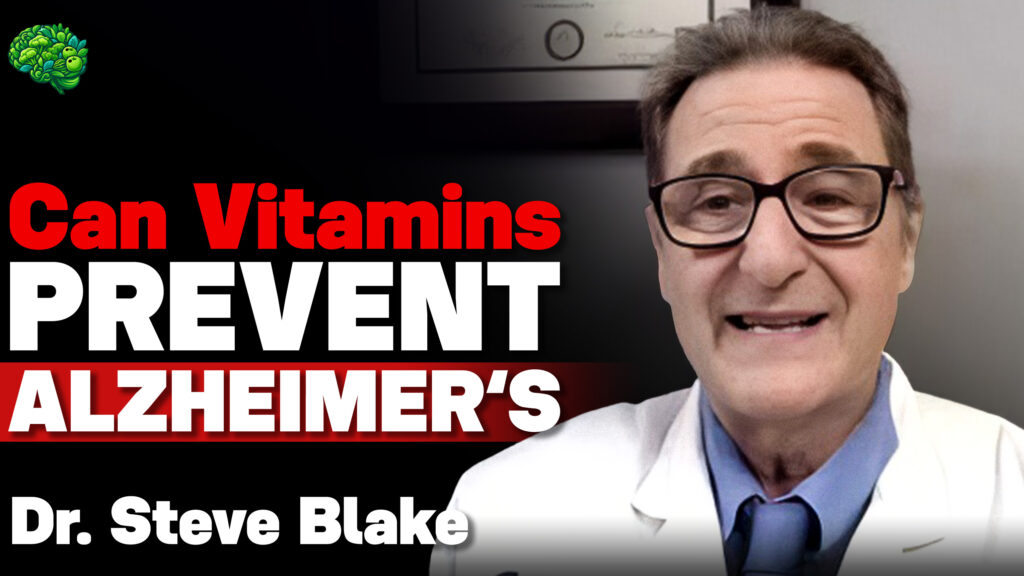
Did you know the right combination of food, as well as vitamins and minerals, can potentially protect your brain from Alzheimer’s? Today’s guest reveals the science behind nutrition and brain health.
In today’s episode, Dr. Steve Blake, an expert in nutritional neuroscience, joins me to discuss how specific vitamins, minerals, and omega-3 fatty acids play a crucial role in brain health and Alzheimer’s prevention. He shares fascinating insights into the importance of a nutrient-rich diet for supporting cognitive function and preventing neurodegeneration.
Dr. Steve Blake also highlights the role of nutrition in optimizing brain structure and function, particularly as we age. We discuss practical ways to incorporate brain-boosting nutrients into your daily routine, how to identify deficiencies, and the key dietary changes that can significantly improve your cognitive health.
If you’re looking to improve your brain health and reduce Alzheimer’s risk through nutrition, this episode is a must-listen. Dr. Steve Blake’s advice will empower you to take control of your cognitive health and make smarter, more informed food choices.
“It's not just what we don't have in our diet but what we already are eating too much of in our diet that could impact the brain as well.”
Dr. Steve Blake, ScD
In this Episode
00:00 – Introduction to Dr. Steve Blake
03:42 – Results from the Hawaii Dementia Prevention Trial
06:35 – The importance of a balanced diet for brain health
14:36 – The effect of reducing saturated fat in your diet
19:07 – Why vitamin B-12 and other nutrients are crucial for brain health
39:06 – More information about advanced glycation end products (AGEs)
40:22 – The role of omega-3s in cognitive function
43:25 – Is the ketogenic diet good for people with Alzheimer’s?
55:16 – How lipopolysaccharides (LPS) affect our body
1:03:27 – Grains and how they contribute to our health
1:05:47 – Where to source organic food
1:07:22 – Other tips for boosting your brain health
1:12:28 – The future of nutrition studies in relation to brain health
Resources:
– Top Supplements for Alzheimer’s Guide
Connect with Dr. Steve Blake:
– Website
– YouTube
– Email – Steve@drsteveblake.com
Connect with Dr. Josh Helman, MD:
– TikTok
– YouTube
– Others
Disclaimer: Please remember that this podcast is for informational purposes only and is not intended as medical advice. Always consult your doctor or healthcare professional before making any changes to your treatment plan.
–
READ THE COMPLETE BLOG POST HERE:
Struggling with memory issues or worried about long-term brain health? You’re not alone. Many people are searching for real, science-backed answers—and that’s where nutritional secrets come into play. In this episode of Alzheimer’s Breakthrough, Dr. Josh Helman sits down with nutritional biochemist Dr. Steve Blake to unpack how missing (and excess) nutrients in the modern diet may quietly accelerate cognitive decline. What you’ll learn isn’t trendy diet talk—it’s practical, measurable nutrition strategies shown in clinical settings to support brain resilience and, in early stages, even improve cognitive performance.
One of the most striking points Dr. Blake makes is that almost everyone thinks they eat healthy. In practice, most diets are nutrient-poor and inflammation-heavy. These nutritional secrets aren’t about perfection—they’re about precision.
Modern diets often:
This combination quietly damages neurons long before memory loss becomes obvious.
Dr. Blake designed and ran the Hawaii Dementia Prevention Trial, enrolling individuals already showing cognitive decline. Participants started with an average Mini-Mental State Exam score around 19, borderline dementia.
After targeted nutritional and lifestyle interventions, many improved into the normal cognitive range within months. That outcome reframed how clinicians think about early-stage cognitive decline.
The goal wasn’t identifying one “magic” nutrient—it was stacking multiple safe, practical changes that people could actually follow.
Rather than extreme diets, the study focused on four achievable food changes.
Participants added one cup per day of blueberries, strawberries, or red grapes.
Why it matters:
This single change helped slow neuron loss and protect cognitive function.
An ounce each of ground walnuts and sunflower seeds was added daily.
This combination delivers:
Together, these forms of vitamin E stabilize brain cell membranes and reduce oxidative damage—far more effectively than synthetic supplements.
AGEs form when animal foods are grilled, fried, or broiled. These compounds:
Participants were encouraged to:
This step alone reduced chronic brain inflammation.
This was the hardest—but most impactful—change.
High saturated fat:
When saturated fat was reduced, many participants noticed clearer thinking within weeks, likely due to improved cerebral circulation.
Dr. Blake explains that saturated fat alters membrane flexibility. When membranes stiffen:
This contributes to vascular dementia, which often overlaps with Alzheimer’s regardless of diagnosis.
These nutritional secrets highlight why fat quality—not just quantity—matters for brain health.
One of the most powerful insights from the episode centers on homocysteine.
High homocysteine:
Adequate real folate (not folic acid) and vitamin B12 convert homocysteine into SAMe, a compound that:
Dr. Blake strongly recommends B12 supplementation due to its safety, low cost, and high neurological value.
Antioxidants don’t function alone. Your brain’s internal defense systems depend on trace minerals:
Without these minerals, antioxidant enzymes fail—leaving neurons vulnerable to oxidative damage.
This is why supplementing antioxidants without mineral support often disappoints.
Real vitamin E neutralizes free radicals—but once it does, it must be recharged by vitamin C.
Without vitamin C:
This pairing highlights one of the most overlooked nutritional secrets: nutrients work in systems, not isolation.
Dr. Blake explains that the body can convert plant omega-3s (ALA) into EPA and DHA—if nutrient status is adequate.
To support this process:
This approach supports brain structure without the inflammatory tradeoffs of heavy animal fat intake.
Despite their popularity, ketogenic diets raise serious concerns for brain health:
While ketones may temporarily improve energy, long-term risks include accelerated vascular dementia. Dr. Blake is clear: this is not a brain-protective strategy.
Some compounds actively promote inflammation:
LPS can trigger massive inflammatory responses—one study showed inflammatory markers rising 65-fold after a single cheese pizza.
These inflammatory cascades directly impact cognition.
Two botanicals stood out in the discussion:
Used carefully, these can support mental clarity, especially when fatigue and circulation are issues.
The biggest takeaway from this conversation is simple but powerful: nutritional secrets matter most when they’re specific, measurable, and biologically grounded. From lowering saturated fat to restoring B vitamins, antioxidants, and trace minerals, Dr. Steve Blake shows that targeted nutrition can meaningfully support brain health—and in early stages, even reverse cognitive decline.
If you found this helpful, check out the full podcast episode Nutritional Secrets That May Help Prevent Alzheimer’s or explore related episodes on nutrition, inflammation, and brain resilience.
What nutritional change has made the biggest difference for your mental clarity or energy? Let me know in the comments—we’re continuing the conversation.
DISCLAIMER: This is not intended to be medical advice. Always consult with your physician first.
*The statements (appearing on this website) have not been evaluated by the Food and Drug Administration. These products are not intended to diagnose, treat, cure, or prevent any disease.
Copyright © 2025 · All Rights Reserved · Dr Josh