
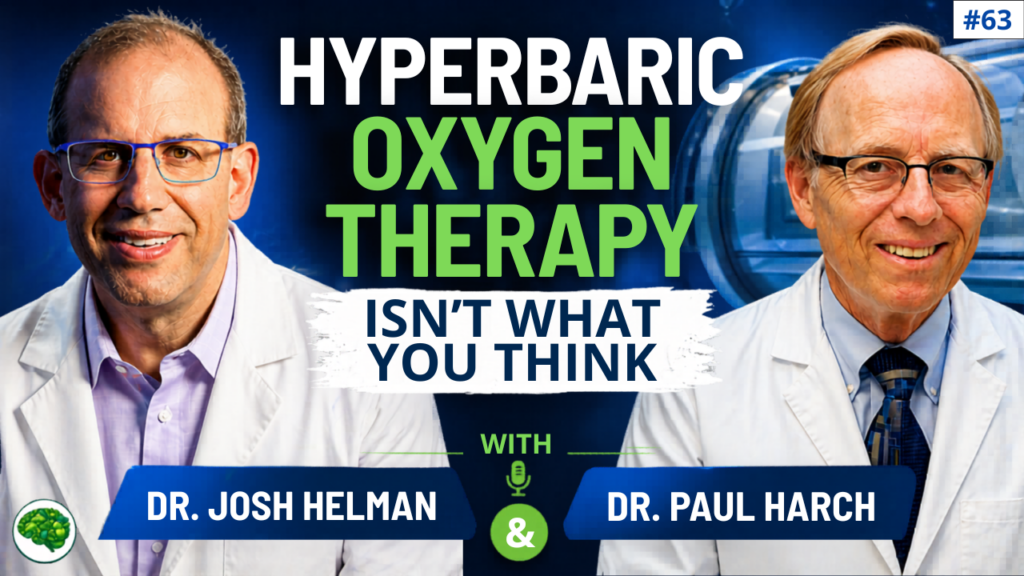
By Dr. Josh Helman, MD, featuring insights from Dr. Paul Harch, MD
Are you noticing subtle changes in your loved one’s memory, or perhaps you’re looking for ways to keep your own mind sharp as you age?
Alzheimer’s disease and cognitive decline are some of the most significant challenges we face today, but new research into Hyperbaric Oxygen Therapy (HBOT) is offering a new sense of hope.
In this guide, we explore how pressurized oxygen is being used as a “drug” to repair brain tissue and restore function.
“We are essentially using pressure and oxygen to flip the switches on the genes that repair the brain. It is about restoring the architecture of the mind, one session at a time.”
— Dr. Paul Harch, MD
 Key Takeaways From the Episode
HBOT is more than just oxygen: It uses specific atmospheric pressure to trigger healing genes in the brain.
Alzheimer’s is a “whole-brain” issue: Treatment should focus on global brain metabolism, not just localized memory spots.
Early intervention is vital: Identifying changes in brain blood flow early can lead to much better outcomes with HBOT.
Personalization is the key: There is no “one-size-fits-all” dose; pressure must be tailored to the individual.
In This Episode
0:00 – Introduction to HBOT
6:00 – The Journey into Hyperbaric Oxygen
12:35 – Research and Imaging Techniques
19:05 – Dosing and Treatment Protocols
26:12 – Individual Treatment Approaches
33:52 – Contraindications and Patient Considerations
42:15 – Understanding QEEG and Dosing in Hyperbaric Therapy
42:35 – Impact of Hyperbaric Oxygen on Neurological Conditions
44:36 – Mechanism of Action: How Hyperbaric Oxygen Works
47:30 – Challenges and Limitations in Treating ALS
49:15 – Exploring Hydrogen Gas & Its Potential
50:36 – Trauma & Hyperbaric Oxygen: Adjusting Protocols
53:19 – Finding Qualified Practitioners
56:22 – Future of Hyperbaric Medicine
59:47 – Key Takeaways & Final Thoughts
READ THE COMPLETE BLOG POST HERE
How HBOT Works: The Power of Pressure and Oxygen
Most people think of Hyperbaric Oxygen Therapy (HBOT) as a treatment for divers, but for the aging brain, it acts as a powerful catalyst for repair.
By breathing pure oxygen in a pressurized chamber, we allow the body to dissolve much higher levels of oxygen directly into the blood plasma. This bypasses restricted blood vessels and delivers vital energy to “dormant” areas of the brain.
The Biological Benefits for Seniors
Reduces Neuroinflammation: Calms the “fire” in the brain that contributes to dementia.
Grows New Blood Vessels: A process called angiogenesis that restores circulation.
Boosts Cellular Energy: Recharges the mitochondria (the power plants) of your brain cells.
Neuroplasticity: Encourages the brain to form new neural connections, even in later life.
Can HBOT Treat the Early Signs of Alzheimer’s?
Clinical case studies led by Dr. Paul Harch indicate that HBOT can significantly improve brain metabolism and slow the progression of Alzheimer’s symptoms.
Many patients report improvements in “brain fog,” word-finding, and overall mood. Because HBOT affects the entire brain, it helps address the cognitive decline that affects daily living and independence.
The Typical “Brain Health” Protocol
Frequency: Usually 5 sessions per week for a period of 8 weeks.
The Experience: You simply relax, read, or nap inside a comfortable chamber while the pressure is gradually increased.
The Goal: To complete a “block” of 40 treatments to trigger long-term epigenetic repair.
Lifestyle: The Perfect Partner for HBOT
While HBOT is a powerful tool, Dr. Josh Helman emphasizes that it works best when paired with a healthy lifestyle.
For those over 65, focusing on a plant-based diet, regular physical movement, and quality sleep ensures that the new blood vessels grown during HBOT are supported by a healthy body.
Conclusion:
Early detection and a proactive approach are the best defenses against Alzheimer’s.
HBOT represents a frontier in regenerative medicine that doesn’t just mask symptoms but aims to repair the underlying biological damage.
If you or a loved one are concerned about memory, exploring the potential of pressurized oxygen could be the breakthrough you’ve been searching for.
Resources:
Connect with Dr. Paul Harch, MD:
Connect with Dr. Josh Helman, MD:
Disclaimer:
This article is for informational purposes only and is not intended as medical advice.
Hyperbaric Oxygen Therapy should only be performed under the supervision of a qualified medical professional. Always consult with your primary physician before starting any new medical treatment.